Filter 06 · Nixie tubes · 0.1 beta
Nixietyper
Words lit in a row of tubes.
Each character gets its own tube, lit in neon behind curved glass, and the tubes stand in a row as on a counter, a clock or an instrument panel. Every tube has its own seed, so no two are bent, worn or blown alike. The whole picture is composited in linear light, and the glare from all the tubes is laid over it at once.
A free, in-browser demo: the whole renderer, compiled to WebAssembly. Nixietyper isn’t sold as a plug-in; the demo above is the tool.
- GIMP 3
- Photoshop
- Desktop app
- Command line · Enterprise
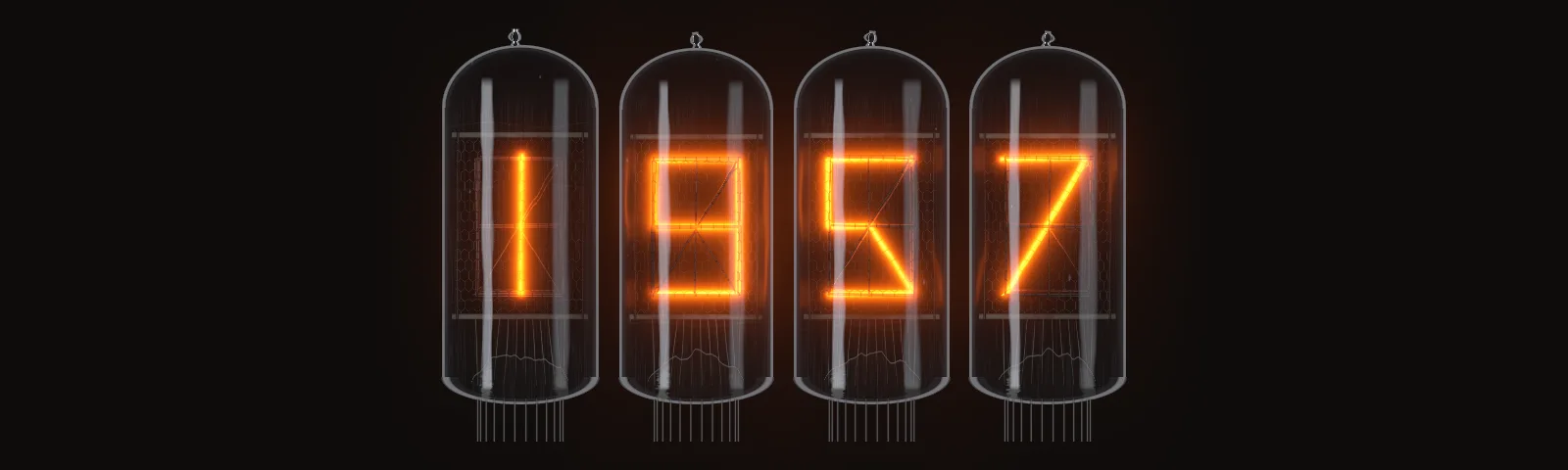
$ nixietyper render -l counter -t 1957 -o counter.png The command that rendered it. Command-line tools come with Enterprise.
Try it live
The real filter, compiled to WebAssembly. Nothing leaves your browser.
One tube per character. Up to sixteen.
Each tube is bent, worn and blown its own way; the seed picks which.
Open the full Nixie tube maker → A free tool: more controls, custom fonts, background and size, PNG download and a shareable link.
How it works
4 steps, each doing one thing.
-
01
Set the words
One tube per character; `\n` breaks lines. Spaces blank a tube or leave a gap. The tubes fit the picture at one scale, aligned left, centre or right.
-
02
Light a tube
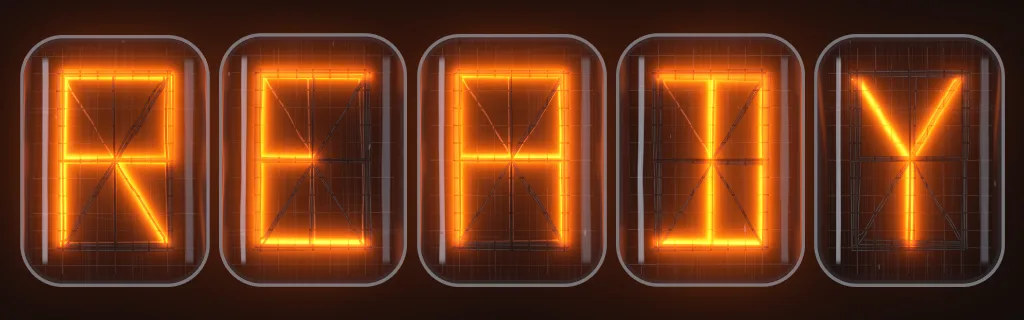
The character is drawn as a lit cathode in neon, with the dark unlit wires behind it, inside glass that catches a highlight and a little grime. The glyph comes from a bundled display face: Anokath, a fourteen-segment tube after the Burroughs B-7971, or RetroChunki, a sixteen-segment lamp cell after F. W. Wood’s 1910 signal-light patent. 1
-
03
Vary every tube
Each tube is seeded on its own, so its glow runs a touch brighter or dimmer, and its grime and burn-in sit heavier or lighter, the way the much-lit places of a real display age faster. One seed picks the whole row.
-
04
Composite in light
The tubes are mixed in linear light, not sRGB, so the neon adds like real light. Then the glare from all of them — halo, bloom and streaks — is laid over the whole picture at once, as a lens would see the bank of tubes together. 2
Specimens
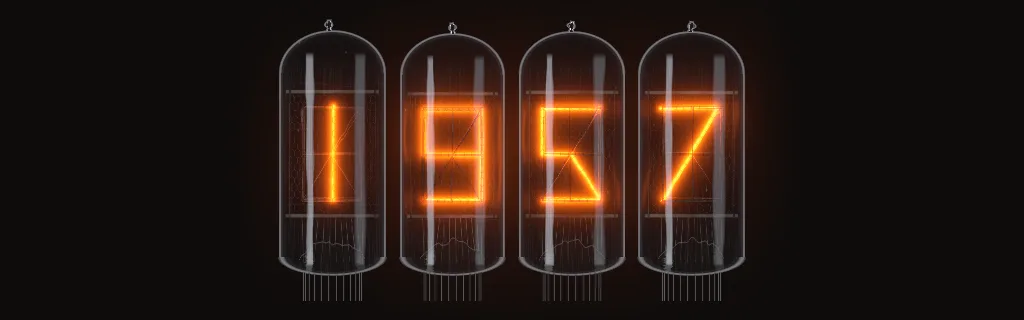
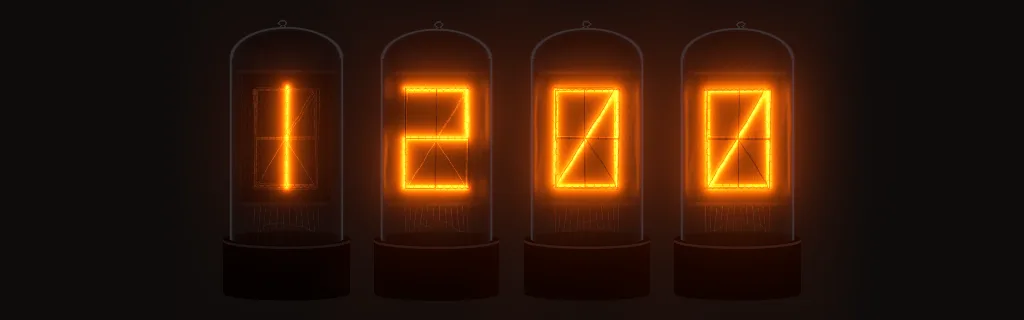
Each look at its defaults. The last is RetroChunki, from Cast Iron Type; the rest are Anokath.

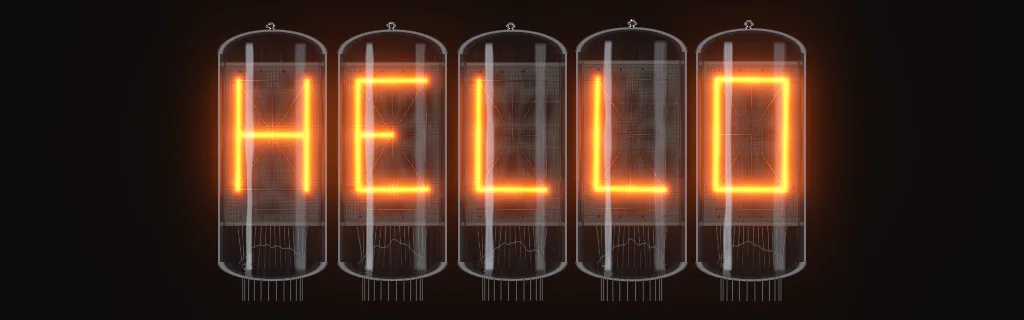
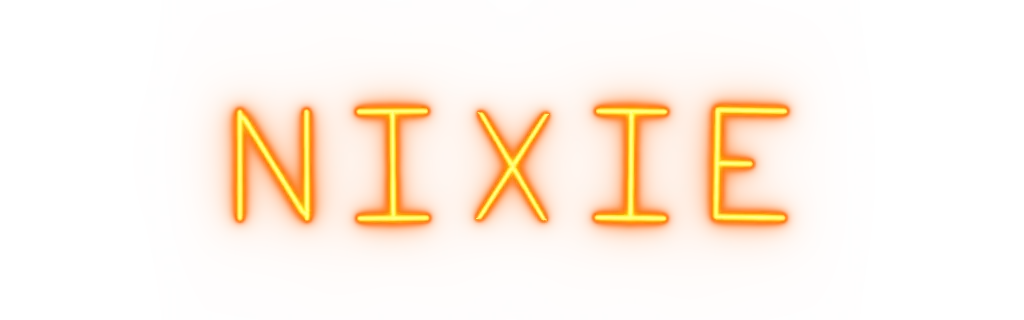
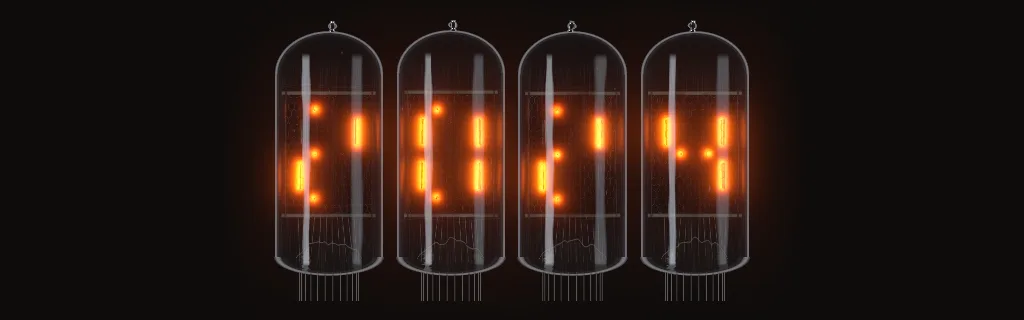
Parameters
Every control, named.
The same names in every host and in the JSON presets. With an Enterprise license, the command-line tool reads those presets and runs them on a thousand files.
| Name | Range | Effect |
|---|---|---|
| look | counter · clock · meter · panel · marquee · glow | A starting point; everything below can be overridden. |
| font | anokath · retrochunki | The display face each character is lit in. |
| seed | any integer | Which way every tube is bent, worn and blown. |
| glow · wear | 0–1 | How hard the cathode burns and how dirty the glass is. |
| gap · margin · align | shares of a tube | How the tubes are spaced and fitted to the frame. |
| variation | 0–1 | How much the tubes differ from one another. |
| spaces | blank · gap | A dark tube, or no tube at all. |
| background | colour · none | A ground behind the tubes, or transparency. |
Hosts
Built on
-
fandango-nixie-transformer
The engine: one tube from one glyph.
-
Cast Iron Type
Anokath and RetroChunki, the bundled display faces.
Notes
Pricing
Nixietyper isn’t packaged yet.
Try it above in the meantime. The plug-ins that are ready are on the pricing page.
Tell me when it’s outThe other filters
Bloom and glare
Bloomifier
Glow that follows the eye, not a blur slider.
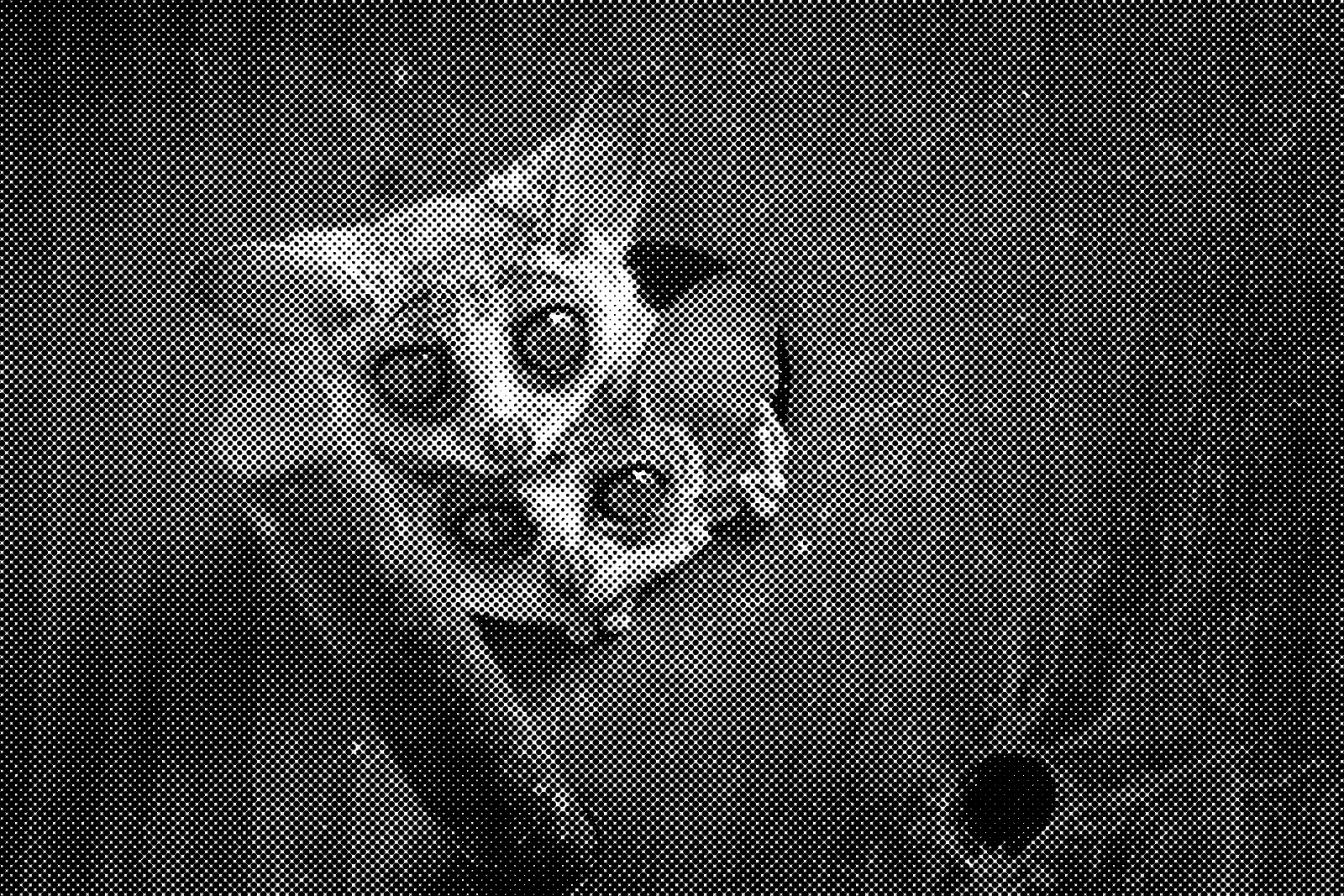
Pattern screens
Patterntastic
Halftones in any shape you like.
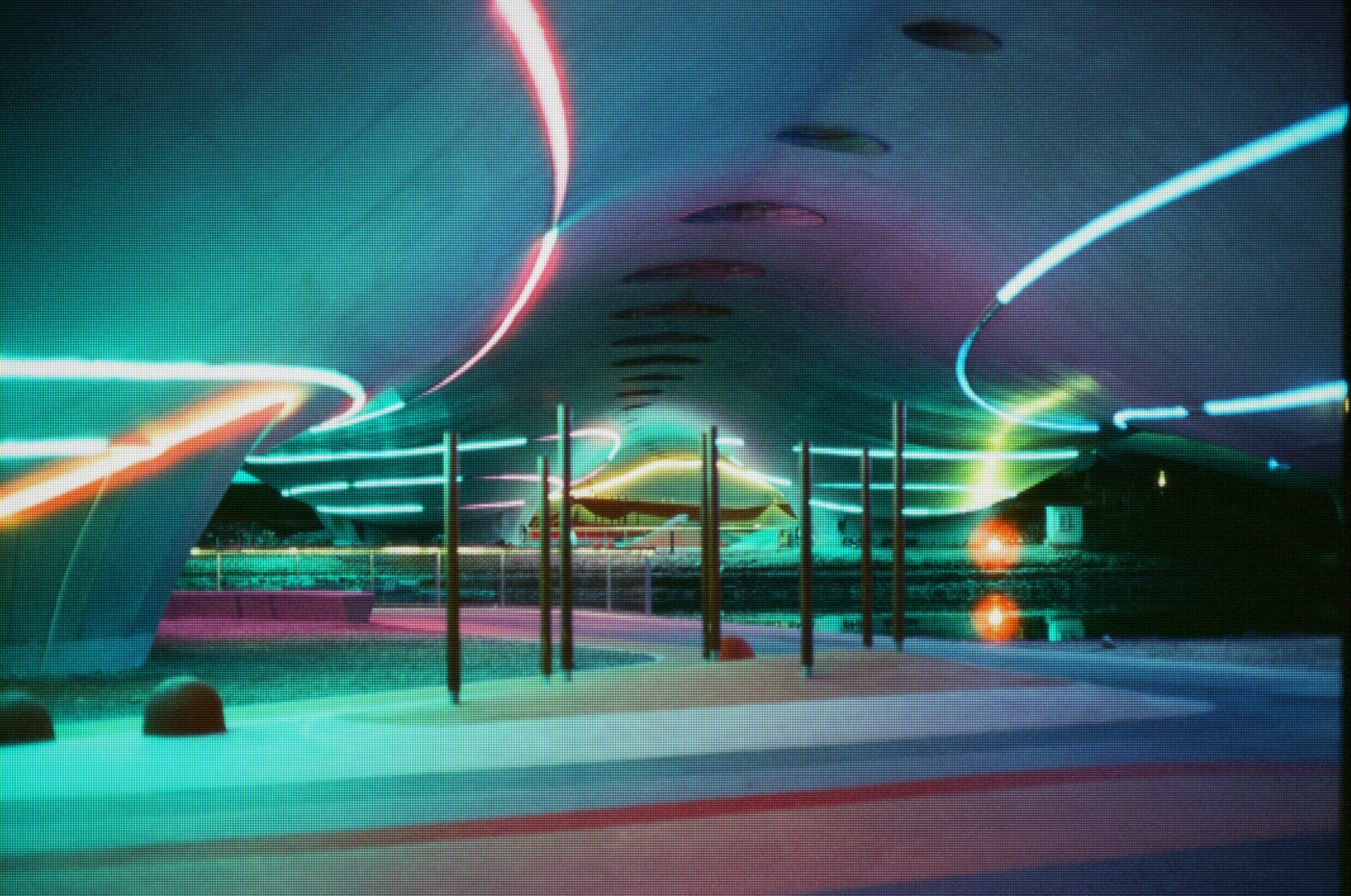
Dithering and old screens
Retrotastical
Twenty-five dithers, and the cable and tube they came through.
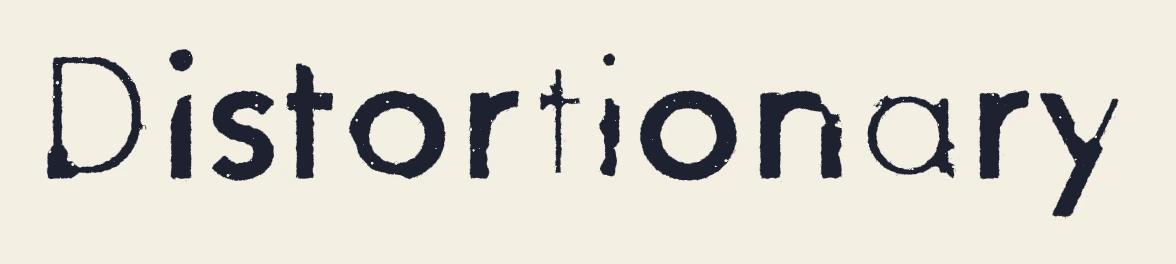
Distressed type
Grungetyper
Type that wears like the real thing.

Masks
Octodoctor
Masks from gradients and keys, snapped to edges.